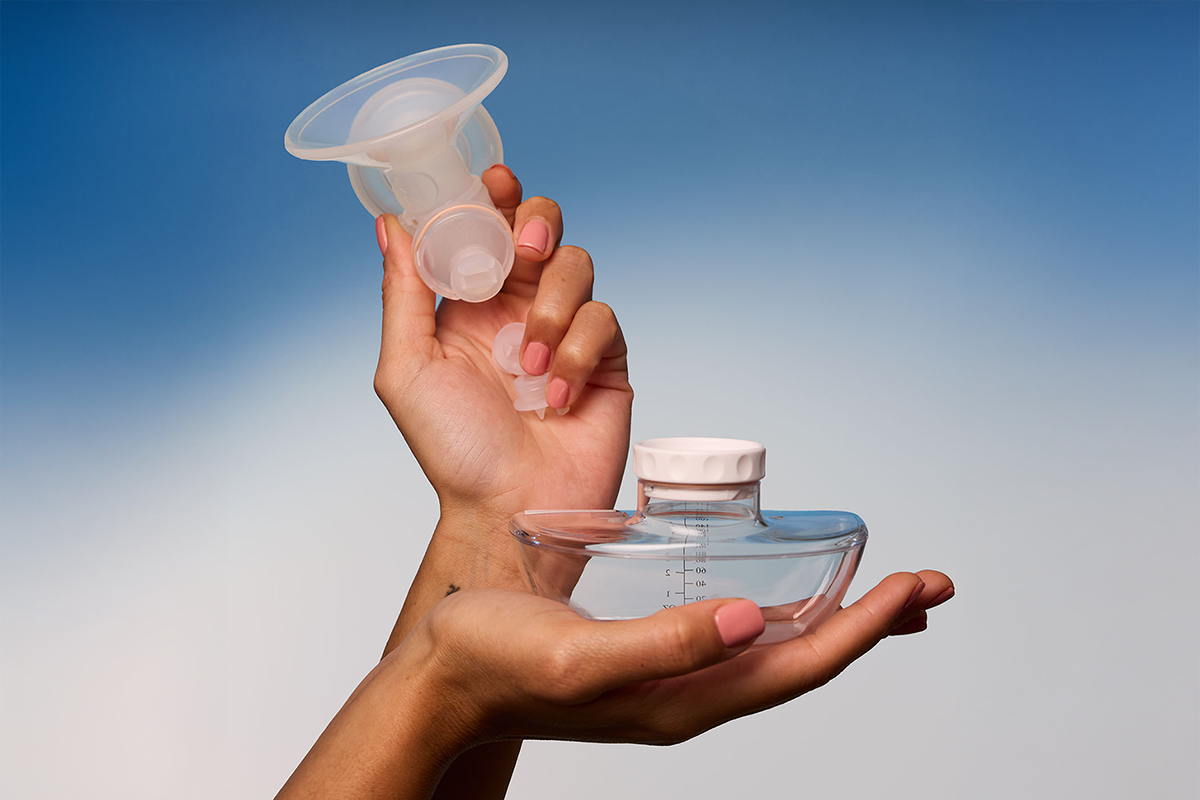

Feeling like your milk supply isn't quite meeting your baby's needs? Going back to work after maternity leave? Or simply looking for a natural way to increase milk supply? Power pumping might be exactly what you need. This intensive breast pump technique mimics a baby's cluster feeding to signal your body to produce more milk. Here is everything you need to know to get started safely and effectively.
What is power pumping?
Power pumping is an intensive breast stimulation technique. The principle is simple: by pumping very frequently over a short period, you mimic the suckling pattern of a baby during a growth spurt. During these phases, babies nurse more often to naturally signal the breasts to produce more milk.
Power pumping tricks your body into believing your baby needs more milk. This stimulates the release of prolactin, the hormone responsible for milk production, leading to a gradual but real increase in supply.
💡 Power pumping does not replace breastfeeding or regular pumping sessions. It is a short-term, targeted technique used when you need an extra boost, not a daily routine.
How does power pumping work in practice?
Choose a day when you can stay at home and be relatively relaxed. Set up your pump and all necessary equipment (bottles, milk storage bags, breast pads) in a comfortable, visible spot so you do not have to think about it.
General guidelines
There are two commonly used rhythms. The first option is to pump for 5 to 10 minutes every hour, at least 10 times throughout the day, leaving a minimum of 45 minutes between each session.
The second option follows a structured one-hour cycle:
- Pump for 15 to 20 minutes
- Rest for 10 minutes
- Pump for 10 minutes
- Rest for 10 minutes
- Pump for 10 minutes
This cycle can be repeated up to 3 times a day, with at least one hour of rest between each session. If you decide to use a wearable breast pump, the hands-free design makes it much easier to get through a full power pumping day while still going about your normal routine.
Power pumping with the Perifit Pump
The Perifit Pump app includes a dedicated Power Pumping programme that guides you through the full session step by step — no need to watch the clock or set timers.
Here is the exact programme it follows over 60 minutes:
- 20 minutes pumping (2 min stimulation + 18 min expression)
- 10 minutes rest
- 10 minutes pumping (2 min stimulation + 8 min expression)
- 10 minutes rest
- 10 minutes pumping (2 min stimulation + 8 min expression)
Silent, wireless, and as powerful as a hospital-grade pump, the Perifit Pump takes care of the timing so you can focus entirely on relaxing — which, as we know, is key to an effective let-down.
How much milk should you get from power pumping?
There is no such thing as a "normal" volume when it comes to power pumping. The amount you express will vary depending on your current milk supply, where you are in your breastfeeding journey, how your body responds to the pump, and factors like stress and hydration levels.
Some mothers express just a few millilitres per session, others much more — and both are completely valid. What matters most is consistency: it is the repeated stimulation that signals your body to produce more milk, not the volume you see straight away.
Most mothers begin to notice a difference after several days of regular practice.
If you are unsure whether your supply is responding, do not hesitate to reach out to a midwife or a lactation consultant — they can review your routine and tailor the protocol to your individual needs.
When is power pumping recommended?
Power pumping is suitable for mothers of healthy, full-term babies. It is not recommended for premature newborns without medical guidance. It is particularly helpful if:
- You notice a sudden drop in milk supply
- You have recently returned to work and want to compensate for missed feeds
- You are exclusively pumping and want to increase your output
- You want to restart your milk supply after a break
- Your baby is unable to nurse directly, on medical advice
Tips to maximise the effectiveness of power pumping
Small adjustments can make a big difference to your results:
- Stay hydrated: breastfeeding and pumping increase thirst. Keep a large water bottle within reach at all times.
- Eat well: maintain a balanced diet rich in protein, calcium, and iron to support lactation.
- Manage stress: stress hormones can interfere with milk let-down. Before a session, try deep breathing, or look at photos and videos of your baby to trigger oxytocin release.
- Rest: power pumping is demanding. Ask your partner or a family member to help with night feeds on either side of your pumping day.
- Check your flange size: using the right breast shield size is essential for comfort and efficiency. Your midwife or an IBCLC (International Board Certified Lactation Consultant) can advise you.
- Be patient: results take a few days. Approach it with a positive mindset — put on a podcast or your favourite series to pass the time.
How often should you power pump?
Power pumping is an occasional technique, not a daily habit. For some women, one day is enough to reset supply. For others, two to three days may be necessary.
Between power pumping days, continue breastfeeding on demand. Regular direct nursing remains the most effective and gentle way to maintain and build your supply over time.
💡 Power pumping sessions should never take priority over feeding your baby. If your baby is hungry, pause the session and nurse them. Your baby's needs always come first.
Common mistakes to avoid
- Sessions that are too long or without sufficient rest: this can lead to soreness, irritation, and exhaustion.
- Practising too frequently: power pumping should remain occasional. Over-pumping risks causing breast engorgement.
- Poor positioning: take the time to sit comfortably. Poor posture can cause back or shoulder pain during long sessions.
- Ignoring discomfort: pumping should never be painful. If you feel pain, stop and check your flange fit or suction level.
- Skipping meals or drinks: your body cannot produce milk efficiently if it is not properly nourished.
Storing and reheating breast milk after a power pumping session
Power pumping sessions can produce more milk than usual, so knowing how to handle it safely matters. Expressed milk can be stored in the fridge for up to 4 days, or frozen for up to 6 months. When it comes to reheating breast milk, always use warm water or a bottle warmer — never a microwave, which creates hot spots that can burn your baby and damage the milk's beneficial properties.
Label each container with the date and time of expression so you can always offer the oldest milk first.
Is power pumping effective for everyone?
Power pumping is generally a well-regarded technique, but results vary from one woman to another. Some mothers see a noticeable increase after just one session. Others may need a few days, or may respond better to alternative approaches such as more frequent direct breastfeeding or galactagogue foods.
If you are struggling with low milk supply, do not hesitate to seek support from a midwife, health visitor, or a certified lactation consultant (IBCLC). They can help identify the underlying cause and guide you towards the most suitable solution.
Power pumping is an accessible, natural technique to help boost your milk supply when you need it most. By mimicking cluster feeding, it sends a clear signal to your body to produce more. Whether you are returning to work, experiencing a dip in supply, or rebuilding after a break, it is a technique worth trying — as long as you listen to your body and keep your baby's feeds as your priority.
Your midwife or lactation consultant is there to support you every step of the way on your breastfeeding journey.
Sources:
- Spatz DL, Froh EB. Pump Early, Pump Often: A Continuous Quality Improvement Project. Journal of Perinatal Education, 24(3), 160-170 (2015). https://pmc.ncbi.nlm.nih.gov/articles/PMC4720864/
- Ru X, Huang X, Feng Q. Successful Full Lactation Achieved by Mothers of Preterm Infants Using Exclusive Pumping. Frontiers in Pediatrics, 8:191 (2020). https://pmc.ncbi.nlm.nih.gov/articles/PMC7192965/
- NHS — Milk supply. https://www.nhs.uk/start-for-life/baby/feeding-your-baby/breastfeeding/breastfeeding-challenges/milk-supply/