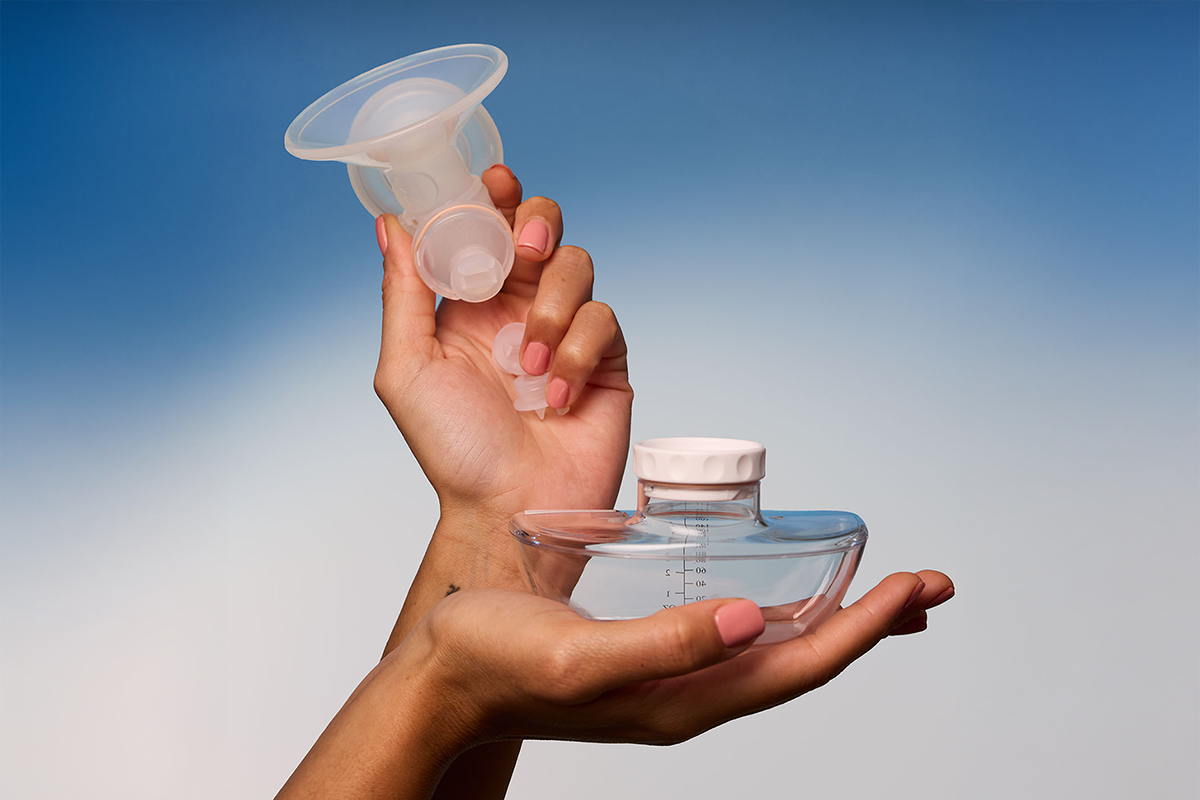

Expressing milk has come a long way. Where traditional breast pumps once kept you tethered to a chair, wearable breast pumps have changed the experience entirely. Compact, discreet, and designed to sit inside your nursing bra, they let you pump hands-free — while working, caring for your older children, or simply going about your day.
But even the most innovative device requires a little know-how to get the best out of it. From correct positioning and suction settings to cleaning, storage, and troubleshooting: this guide walks you through everything, step by step.
Whether you are just starting out or looking to optimise your pumping routine, you will find practical advice here — backed by evidence and adapted to your daily life.
What is a wearable breast pump, and how does it work?
A wearable breast pump is a compact, self-contained device that fits discreetly inside your bra. Unlike traditional pumps, there are no tubes, no external motor to carry, and no need to find a quiet corner to express.
Most models work on the same two-phase principle as hospital-grade pumps:
- Stimulation mode: fast, light suction cycles that mimic your baby's initial feeding pattern and trigger the let-down reflex.
- Expression mode: slower, deeper suction that draws milk out efficiently.
The Perifit Pump, for instance, delivers suction power of up to 300 mmHg — comparable to many hospital-grade pumps — and connects to a smartphone app for precise, real-time control. Its operation at as low as 35 dB makes it one of the quietest wearable pumps available, ideal for use at work or in public.
💡 Not all wearable pumps offer the same suction strength. When comparing models, look for adjustable suction levels and a stimulation/expression dual mode — these two features have the greatest impact on milk output and comfort.
When should you start using a wearable breast pump?
There is no single right moment to begin pumping. It depends on your situation, your baby's rhythm, and your personal needs. A few general guidelines can help.
It is generally recommended to wait until your milk comes in — usually 2 to 4 days after birth — before starting to express, unless advised otherwise by your midwife or health visitor. This gives your body time to establish a supply naturally, guided by your baby's feeding cues.
You may find a wearable pump particularly useful in the following situations:
- Returning to work: pump discreetly during the day without interrupting your schedule.
- Building a milk stash: express after morning feeds, when supply tends to be highest.
- Supporting a low milk supply: more frequent pumping sessions can help stimulate production.
- Engorgement or blocked ducts: gentle expression provides relief between feeds.
- Premature baby or latch difficulties: pump to maintain supply while your baby is unable to feed directly.
💡 Morning sessions — ideally within an hour of waking — tend to yield the most milk, as prolactin levels are naturally higher at this time of day. Pumping after a feed (rather than instead of one) is also a good way to build a stash without disrupting your supply.
How to use a wearable breast pump: step by step
Following a consistent routine makes a real difference to both comfort and milk output. Here is how to get set up correctly.
Step 1 — Prepare your space and equipment
Choose a calm, comfortable environment. Stress and tension inhibit the let-down reflex, so even a few minutes to relax before starting can make a noticeable difference.
Before assembling the pump:
- Wash your hands thoroughly with soap and water.
- Check that all components (flange, connector, valve, bottle) are clean and completely dry.
- On the Perifit Pump, ensure the diaphragm and duckbill valve are properly attached.
Step 2 — Choose the right flange size
Flange fit is one of the most overlooked — and most important — factors in pumping. An ill-fitting flange can cause friction, pain, and significantly reduce the amount of milk expressed.
To check your fit:
- Your nipple should move freely in the tunnel without rubbing the sides.
- Only a small amount of areola tissue should be drawn in.
- There should be no pain or pinching during pumping.
If in doubt, consult your midwife or a lactation consultant (IBCLC), who can help you measure accurately. Perifit offers several flange sizes — choosing the right one from the outset saves time and discomfort.
💡 The NHS recommends that any woman experiencing pain or low milk output while pumping should seek advice from a midwife, health visitor, or lactation consultant. Flange sizing and suction settings are the two most common causes of difficulty.
Step 3 — Position the pump correctly
Centre your nipple carefully in the flange, then secure the pump inside your supportive nursing bra. A well-fitting bra is essential: the pump needs to sit snugly against the breast to maintain suction and prevent leaks.
For best results:
- Sit with your back straight and shoulders relaxed.
- Lean slightly forward to help milk flow toward the collection cup.
- Avoid lying flat unless your pump's instructions specifically allow it — most wearable pumps are designed for upright use.
Step 4 — Start with stimulation mode
Always begin in stimulation mode: a rapid, light rhythm that encourages the let-down reflex. On the Perifit Pump, this mode starts automatically when you power on the device.
After approximately 1 to 2 minutes (or when milk begins to flow), the pump switches — automatically or manually depending on the model — to expression mode: a slower, deeper suction designed to draw milk out efficiently.
Step 5 — Adjust suction to your comfort level
Set suction to the highest level that remains comfortable — not the maximum available. A common misconception is that stronger suction yields more milk. In reality, excessive suction can inhibit the let-down reflex and cause nipple trauma.
The Perifit app allows you to fine-tune suction strength, rhythm, and session duration in real time, without removing the pump or undressing.
Step 6 — Session length and frequency
A typical pumping session lasts between 15 and 20 minutes. Sessions that are too short may not fully empty the breast; sessions that are too long add unnecessary fatigue without increasing output.
As a general guide:
- For maintaining supply alongside breastfeeding: 1 to 2 sessions per day is usually sufficient.
- For exclusively pumping: aim for 8 to 10 sessions per 24 hours to match a newborn's feeding frequency.
- For building a stash: 1 session each morning after the first feed.
Step 7 — Clean up and store your milk
Once the session is complete, press the power button to stop the pump, then carefully remove it from your bra. Transfer expressed milk to a sterile, airtight container and label it immediately with the date and time.
UK guidelines for breast milk storage at home:
- Room temperature (up to 25°C): up to 4 hours.
- Refrigerator (4°C or below): up to 8 days — ideally use within 3 to 5 days.
- Freezer: up to 6 months in a dedicated freezer (0°C or below).
Store milk in small portions of 60 to 120 ml to reduce waste. Never refreeze thawed milk.
Step 8 — Clean the pump after every use
Disassemble all parts that came into contact with milk: flanges, connectors, valves, and bottles. Wash them in warm, soapy water using a dedicated brush — not a kitchen sponge — then rinse thoroughly and allow to air dry on a clean surface.
The Perifit Pump's Hub (the motorised unit) must not be immersed in water. Wipe the exterior with a damp cloth only.
Sterilise components regularly — particularly in the early weeks or if you or your baby are unwell. A steam steriliser or cold-water sterilising solution are both suitable.
Can you use a wearable breast pump every day?
Yes. Wearable breast pumps are designed for daily use and are a practical option for parents managing a regular pumping routine alongside work or other commitments.
A few points to bear in mind for sustained daily use:
- Monitor your output: if you notice a gradual drop in milk volume over several days, check your flange size and suction settings before drawing conclusions about your supply.
- Charge the pump daily: the Perifit Pump's battery lasts through several sessions, but getting into the habit of charging overnight avoids disruptions.
- Replace wear parts: valves and diaphragms degrade over time and can affect suction. Check them monthly and replace as needed.
- Combine with direct breastfeeding where possible: breastfeeding is generally more efficient than pumping at removing milk and stimulating supply.
💡 Research published in Maternal & Child Nutrition (2022) found that parents who used wearable pumps reported significantly higher rates of continued breastfeeding at 6 months compared to those who stopped pumping due to inconvenience. Hands-free design reduces the practical barriers to maintaining a supply.
Specific situations: what you need to know
Can you use a wearable pump lying down?
Some wearable pumps allow reclined use; others do not. Check the manufacturer's guidelines for your specific model before trying. If permitted, ensure the pump has a secure seal to prevent leaks and avoid positions where the milk collection cup could overflow.
For the Perifit Pump, we do not recommend pumping in a reclined or lying-down position, as the device is optimised for upright use to ensure both suction performance and leak-free milk collection.
Can you use one with a low milk supply?
Yes — and frequent use may actively help. Pumping sends a signal to your body to produce more milk. The key is consistency: short, frequent sessions throughout the day are more effective than occasional long ones.
If you are concerned about your supply, speak to your midwife, health visitor, or a lactation consultant. They can assess whether supply is genuinely low or whether technique and equipment need adjusting.
What about different breast and nipple sizes?
Wearable pumps can be used effectively with a wide range of breast and nipple sizes. The critical factor is always flange fit. Measure your nipple diameter before purchasing additional flanges, and consult a lactation consultant if you are unsure.
Common mistakes to avoid
Using the wrong flange size
The most common mistake. If the flange is too small, it compresses the nipple; if too large, it draws in too much areola tissue. Both reduce output and cause pain. Re-measure if your output drops unexpectedly.
Setting suction too high
More suction does not mean more milk. An intensity that is too high can block the let-down reflex and cause nipple soreness or bruising. Always start low and increase gradually to the highest comfortable level.
Sessions that are too short or too long
Aim for 15 to 20 minutes per session. Stopping too early limits output; pumping beyond that point rarely yields more milk and adds unnecessary fatigue.
Neglecting cleaning and maintenance
Residual milk in components is a breeding ground for bacteria. Clean all milk-contact parts after every session, and sterilise regularly. Replace valves and membranes as soon as they show signs of wear — a compromised valve is the most frequent cause of sudden suction loss.
Why is my pump not expressing much milk?
Low output is common and does not necessarily indicate low milk supply. Before drawing conclusions, check the following:
- Stress or fatigue at the time of pumping — these suppress the let-down reflex.
- Infrequent sessions — irregular pumping is less effective than a consistent routine.
- Incorrect flange size or poor positioning.
- Suction settings that are too high or too low.
- Unrealistic expectations — a baby is typically more efficient at extracting milk than any pump. Output during pumping sessions rarely reflects your full supply.
If low output persists despite adjustments, speak to your midwife or a lactation consultant. They can assess the situation and recommend targeted strategies.
Troubleshooting: loss of suction
A sudden drop in suction is usually caused by a simple mechanical issue rather than a pump fault. Work through this checklist before contacting support:
- Are all components correctly assembled?
- Is the duckbill valve properly attached and showing no signs of wear or cracking?
- Is there moisture or dried milk in the connectors?
- Is the flange correctly positioned and centred on the nipple?
- Is the battery sufficiently charged?
On the Perifit Pump, the app also allows you to check settings and switch programmes without removing the device — useful for ruling out an incorrect mode selection as the cause.
A wearable breast pump can make a real difference to your breastfeeding journey — provided you have the right technique and a routine that suits your lifestyle. The fundamentals are straightforward: correct flange fit, appropriate suction settings, consistent session frequency, and careful cleaning and storage.
The Perifit Pump brings additional flexibility through its connected app, hospital-grade suction, and quiet motor — allowing you to pump discreetly wherever your day takes you.
If you have any concerns about your milk supply, pain during pumping, or your baby's feeding, do not hesitate to reach out to your midwife, health visitor, or a lactation consultant (IBCLC). They are your best allies in making breastfeeding a positive experience.
Sources:
- NHS — Expressing and storing breast milk: https://www.nhs.uk/conditions/baby/breastfeeding-and-bottle-feeding/breastfeeding/expressing-breast-milk/
- NICE — Postnatal care guideline (NG194), 2021: https://www.nice.org.uk/guidance/ng194
- La Leche League GB — Using a breast pump: https://www.laleche.org.uk/using-a-breast-pump/
- Jiang H et al. — Wearable breast pump use and breastfeeding duration: Maternal & Child Nutrition, 2022. https://pubmed.ncbi.nlm.nih.gov/35271350/