
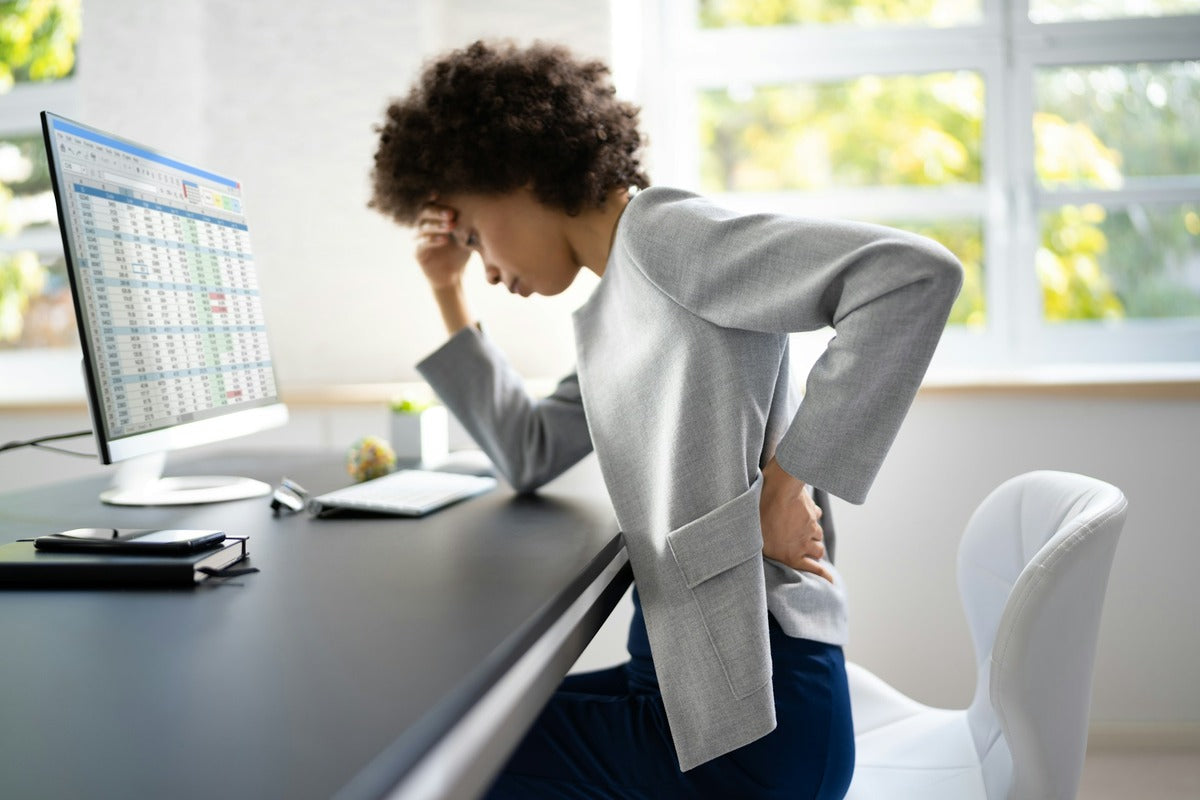
You might not realise it, but the way you sit, stand, and hold yourself has a direct impact on your pelvic floor. These two things are far more connected than most people are told.
Whether you are dealing with bladder leaks, pelvic discomfort, or simply want to take better care of your body, your posture may be a key piece of the puzzle. In this article, we explore exactly how posture and pelvic floor health influence each other, what signs to watch out for, and what you can do to improve both.
The link between posture and your pelvic floor
Your pelvic floor is a group of muscles that sit at the base of your pelvis. They support your bladder, uterus, and bowel. Like any muscle group, they are directly affected by the alignment of your body.
Poor posture places excess pressure on these muscles. Over time, this can lead to dysfunction, pain, and symptoms such as urinary incontinence or pelvic organ prolapse.
Good posture, on the other hand, helps distribute load evenly and allows your pelvic floor to function as it should.
💡 Research has shown that women with urinary incontinence and myofascial pelvic floor dysfunction tend to have an anterior pelvic tilt (pelvis tipped forward) and altered body alignment. Addressing posture is therefore a fundamental part of recovery.
How sitting affects your pelvic floor
Most of us spend a significant part of the day seated. Yet few people consider what this does to their pelvic floor.
Slouching forward increases intra-abdominal pressure, which pushes down on the pelvic floor muscles. Over time, this can contribute to stress urinary incontinence and a weakened pelvic floor.
Studies also show that upright sitting postures require greater pelvic floor muscle activity than slumped positions, meaning your muscles are working and strengthening more effectively when you sit tall.
The ideal sitting position for your pelvic floor:
- Sit with your buttocks at the back of the seat
- Keep your feet flat on the floor, hips at roughly 90 degrees
- Distribute your weight evenly across both sitting bones
- Avoid crossing your legs
- Keep your spine gently upright, not rigidly straight
- Imagine a thread gently lifting the crown of your head upwards
Standing posture matters too
It is not just sitting that has an impact. How you stand also affects pelvic floor muscle activation.
Research suggests that ankle position plays a surprising role. Standing with your toes pointing slightly upward (dorsiflexion) may encourage better pelvic floor engagement compared to a flat or elevated heel position.
💡 High heels shift your centre of gravity forward, which can tilt the pelvis anteriorly and increase pressure on your pelvic floor muscles. Opting for flatter, supportive footwear when possible is a small but worthwhile change.
Signs that your posture may be affecting your pelvic floor
It can be difficult to connect everyday symptoms to something as subtle as posture. Here are the key signs to look out for:
Pelvic pain or pressure A feeling of heaviness or discomfort in the pelvic area, particularly after long periods of sitting or standing, may be linked to postural strain.
Bladder and bowel changes Poor posture can compress the abdomen and disrupt normal function. You may notice:
- Leaking urine when sneezing, coughing, or exercising
- A frequent or urgent need to urinate
- Difficulty emptying the bowel fully, or constipation
Pelvic organ prolapse In more severe cases, chronically weakened pelvic floor muscles can contribute to pelvic organ prolapse, where one or more pelvic organs descend from their usual position. This can cause a feeling of bulging or pressure in the vaginal area.
Disrupted breathing patterns Your posture affects how your diaphragm moves. When alignment is off, your breathing becomes shallower and less coordinated with your pelvic floor. Proper alignment allows your diaphragm and pelvic floor to work in synergy, supporting core stability and continence.
What you can do to improve your posture and pelvic floor health
1. Work on your sitting and standing habits
Start by simply noticing your posture throughout the day. Set reminders if needed. Small, consistent corrections add up.
2. Practise pelvic floor exercises (Kegels)
Kegel exercises are one of the most effective tools for strengthening the pelvic floor. To do them correctly:
- Contract your pelvic floor muscles (as if stopping the flow of urine)
- Hold for 10 seconds, then fully relax for 10 seconds
- Repeat 10 times, 3 to 5 times a day
- Keep your abdominal, buttock, and thigh muscles relaxed throughout
💡 Kegel exerciser with biofeedback, such as the Perifit Care, can help you check whether you are contracting and relaxing correctly. Many women unknowingly bear down instead of lifting up, which can worsen symptoms.
3. Strengthen your deep core
Your pelvic floor does not work in isolation. It is part of a wider deep core system that includes your diaphragm, deep abdominal muscles, and lower back muscles.
Exercises such as planks, diaphragmatic breathing, and Pilates-based movements can help rebuild this system and improve posture at the same time.
4. Consider yoga or Pilates
Both practices place a strong emphasis on alignment, breath, and core engagement. They are widely recommended by physiotherapists for women managing pelvic floor dysfunction.
How long before you see results?
Progress varies from person to person. However, most women begin to notice meaningful improvements within 6 to 8 weeks of consistent effort. This is the typical timeframe cited for pelvic floor exercise programmes.
Several factors influence how quickly you progress:
- Your consistency in applying postural changes
- The severity of any existing pelvic floor dysfunction
- Your overall fitness and activity levels
- Hormonal status (for example, post-menopause, postnatal)
Combining postural awareness with targeted exercises gives the best results. A holistic approach, rather than focusing on one thing alone, is key.
When to seek professional support
If your symptoms are persistent or affecting your quality of life, do not hesitate to seek help. Pelvic floor problems are not a normal or inevitable part of being a woman, and effective treatment is available.
The following professionals can help:
- Women's health physiotherapists (the most common first point of referral in the UK)
- GP or gynaecologist, for an initial assessment and onward referral
- Urogynaecologists, for more complex presentations such as prolapse or severe incontinence
- Specialist continence nurses, available through many NHS trusts
Treatment options include pelvic floor rehabilitation, biofeedback, bladder retraining, and in some cases surgical intervention. Physical therapy is typically the first-line recommendation.
💡 You can self-refer to many NHS physiotherapy services for pelvic floor concerns. You do not always need to wait for a GP referral. It is worth checking with your local NHS trust.
Your posture and your pelvic floor are deeply connected. The way you sit, stand, and breathe all play a role in how well these muscles function day to day.
The good news is that small, consistent changes make a real difference. Adjusting how you sit, practising Kegel exercises, and strengthening your core are all steps you can take today. And if you need further support, qualified professionals are there to help you.
Your pelvic floor deserves attention. It is never too early, or too late, to start caring for it.
Sources:
- https://www.pelvicfloorfirst.org.au/news/647/is-posture-important-for-continence/
- https://www.ncbi.nlm.nih.gov/pmc/articles/PMC6192454/
- https://pubmed.ncbi.nlm.nih.gov/34228785/
- https://www.health.harvard.edu/staying-healthy/3-surprising-risks-of-poor-posture
- https://www.mayoclinic.org/diseases-conditions/pelvic-organ-prolapse/symptoms-causes/syc-20360557
- https://pubmed.ncbi.nlm.nih.gov/18760158/
- https://my.clevelandclinic.org/health/articles/14611-kegel-exercises
- https://www.ncbi.nlm.nih.gov/pmc/articles/PMC9819097/